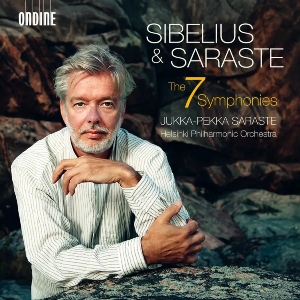
Jean Sibelius (1865-1957)
Symphonies 1-7
Helsinki Philharmonic Orchestra/Jukka-Pekka Saraste
rec. live (2-7) & studio (1), 2024-26, Helsinki Music Centre, Finland
Ondine ODE1525-2T [3 CDs: 220]
We have been blessed with quite a lot of new Sibelius recordings of late and that includes sets of the complete symphonies from Rouvali and Mäkelä, both of whom I esteem as doing honour to their greatest compatriot composer. They employed Swedish orchestras – hardly inappropriate, as Swedish was Sibelius’ mother tongue, even though he learned enough Finnish to read the Kalevala – but Saraste, yet another Finnish conductor, here has the Helsinki Philharmonic to lend even more ethnic credibility to his taking on all seven symphonies; all of which here except the first are live concert performances. In addition to those more recent sets, we might also take into consideration older, classic collections from Colin Davis, Paavo Berglund and Maurice Abravanel.
The first broad point to make is that virtually every symphony – indeed almost every movement within those symphonies – is swifter than rival versions; Saraste clearly prioritises momentum over point-making. While it is admittedly virtually impossible to romanticise the bleak Fourth, it is feasible to apply a leaner, more economical idiom of the later symphonies even to the first three and certainly Saraste eschews rhetorical flourishes in favour of emphasising the taut organic structure of Sibelius’ symphonic style. He employed the same taut, unsentimental approach to his two previous complete sets with the Finnish Radio Symphony Orchestra first in the studio then live in St Petersburg; this is his manner in general, as per his recording of Bruckner’s Eighth Symphony, which my colleague Marc Bridle found “perfunctory”, whereas I deemed it at least interesting, if hardly my preferred treatment.
My second general observation concerns the excellence of the recorded sound which is impeccably clean, clear rich and balanced. I can detect no difference in quality between the single studio and all the other live performances, the audience are so well behaved and the engineers have done such a good job.
The symphonies are not arranged chronologically on the three discs – although they could have been thus fitted – and as I prefer to listen in order, so I can trace the composer’s artistic development over the twenty-five years in which the seven symphonies were composed, that entails chopping and changing among the three CDs.
The mysterious opening to the First with its haunting clarinet solo over a drum rolls superbly done, as is the sudden drama of the main orchestral theme. Saraste’s attack could be wearying if it were relentless but knows when to relax and lean into the melodies, as with the intervention of the harp and trumpet just before the accelerating coda. The Andante is first stately and graceful, then the gloomier mood of Romantic yearning takes over in music which advertises its kinship to Tchaikovsky in his most soulful mode. The Scherzo, however, is pure Sibelius in the contrast between its driven outer sections and the almost pastoral Trio; the Helsinki strings and woodwinds in those respective sections are notably virtuosic here and Saraste’s energy infuse the whole. There is virtually no break before the finale, so a sense of forward motion is sustained and Saraste is particularly attentive to contrasts in dynamics and orchestral colour, constantly enlivening proceedings. The Big Tune starting three and a half minutes before the end is glorious and in no sense feels hurried. This is a decided success.
The perkiness of the opening to the Second Symphony here might surprise some but there is a certain broody menace to the string arpeggios given particular prominence, perhaps reminding the listener of Wagner’s Forest Murmurs and sleeping dragons. Saraste by no means makes this symphony all pastoral sweetness and light; his urgency and emphasis on the inky colouring from the low strings and percussion lends it a certain edginess, despite the chirruping woodwind. The second movement, too, is surely darker than usual, shot through with anxiety and highly dramatic; I don’t think I have heard this movement played with such lean concentration. The outer sections of the Scherzo are of course very fast, twice sandwiching the gentle oboe solo in the broad, lyrical Trio, which is repeated, in an unusual A-B-A-B-A structure. This melds seamlessly into the famous finale with another Big Tune over pounding timpani and once more I encounter no sense of rush in Saraste’s direction, just purpose. The little motif which begins on the flutes at 2:35 builds inexorably but Saraste keeps the volume tamped down so the orchestra can eventually let rip in the first climax at 6:10, for which he prepares with some carefully gauged rallentando. The string playing thereafter is really glamorous and the switch to D major really hits home.
The scurrying first movement of the Third Symphony is a joy and Saraste lets the orchestra off the leash for the great outburst at 6:21; the playing is thrilling. After the turmoil, he really captures the confident, “wide-open-spaces” nature of the conclusion. The lilting waltz of the Andantino is gently shaped and moulded using subtle rubato and the orchestrational and rhythmic modifications of the tune are skilfully executed. The restless finale harangues the listener until the pounding motif makes its entry half way through the movement and Saraste gives it as harsh an edge as possible until it sounds positively scary before the reassuring sequence of key changes guides us into C major and home.
It was Rouvali’s recording of the Fourth which finally reconciled me to its potentially alienating aridity; Saraste is notably more urgent than both he and Mäkelä by two minutes in the two slow (first and third) movements, typically pushing on but asking for dark, sumptuous tone from his low instruments – violas, cellos, double basses and bassoons are prominent, the trombones commenting gravely in the Largo. The conclusion of the movement is grand and imposing, contrasting neatly with the more animated finale whose mood is lifted intermittently by the limited interventions of the glockenspiel. The overwhelmingly sombre tenor of the symphony surely suits the supposedly austere, saturnine Finnish temperament and the performers here are 100% ethnic.
If the Fourth is the hardest Sibelian symphonic nut to crack, then the Fifth is Sibelius’ most popular with good reason. Taut, dramatic, mystical, melodically fecund and somehow functioning as a repository of what it is to be and feel Finnish (I speak with some small, vicarious authority being married to a Finn…), it is here given a tight, concentrated performance which is thoroughly absorbing from start to finish. The big climax of the first movement at 7:50 really swings, melding seamlessly into the canter-a-horseback tune which brings us home and it’s an exhilarating ride. The leisurely 3/2 waltz of the Andante comes as a relaxed, lyrical interlude but Saraste maintains the shape and propulsion of the music; the Allegro molto finale really sings – kudos to the horns playing live here, delivering the famous “Swan Hymn” flawlessly. The violins playing pianissimo rivals Vänskä’s for delicacy and the apotheosis, as the trumpets take over that theme, is radiant, capped by aptly gauged pauses in the final chords. Appropriately – and for the only time in this set – applause and a little appreciative whooping are retained – but after a seemly gap (no twerp jumps the gun…).
The Sixth Symphony opens with a keening, beseeching melody which is passionately played here then transmutes into one of those bustling Sibelian tropes we know so well. Saraste keeps progress muted until the fifth minute when suddenly broad vistas open and the playing is light and joyful before the heroic coda with rumbling timps, grumbling low strings and a sudden hiatus before the grand but still questioning chordal close. It is all expertly judged. The Allegretto is similarly quizzical and ambivalent; Saraste avoids heavy underlining and the mood hardly changes as we shift into the Poco vivace and motoric, staccato and syncopated rhythms take over – very neatly managed – building to a sudden, vehement climax which is over as quickly as it begins. Yet another Big Tune opens the finale and now Saraste gives this movement more Romantic weight than we hear in any other performance here; he brings out the seething, surging quality and the orchestra are encouraged to create a really opulent, saturated sound – lovely. There is still a mercurial, faery quality to the music here not so far removed from Mendelssohn and Saraste is careful not to burst that bubble; the final minute is gossamer-light and preserves the other-worldly atmosphere of legend.
If I have reservations over any symphony here it is with the Seventh – not because it isn’t beautifully played but because I am so wedded to two favourite versions by Ormandy and Karajan (on DG). Saraste’s tendency to press ahead is consistent with his approach to the preceding six symphonies but I miss the expansiveness and flexibility of the old maestros, who take two and a half and three and a half minutes more respectively over the single movement. I still quite enjoy Saraste’s account, not least for its luxuriant sound, but the semi-quaver passages in the Presto section are harried and I want him to caress the melodies more lovingly, so I will return to the older recordings for their extra poetry.
As I said of both Mäkelä’s and rather different Rouvali’s sets, theirs is not the only way to deliver Sibelius and Saraste, too, has taken his own path; I freely admit that I had not expected to be so taken by is way with this music. All three exponents offer wholly convincing, rewarding – if disparate – interpretative stances and offer compelling realisations of this wonderful music.
(Note: please be aware that there has been a rare manufacturing issue with this: apparently parameters for the first pressing of CD1 were very close to the threshold causing it to skip on some – usually older – CD players. Ondine are aware of this and have offered replacements. As they are currently on the third print, this should not affect more recent batches.)
Ralph Moore
Buying this recording via the link below generates revenue for MWI, which helps the site remain free