
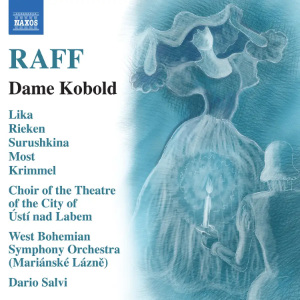
Joachim Raff (1822-1882)
Dame Kobold (1869)
Matthias Lika (baritone) – Don Juan
Gustav Wenzel Most (tenor) – Don Manuel
Lara Rieken (soprano) – Donna Angela
Julia Sirishkina (soprano) – Beatrice
Lukas Krimmel (bass) – Rodrigo
Balduin Schneeberger (baritone) – Don Guilio
Choir of the City of Ústí nad Labem
West Bohemian Symphony Orchestra/Dario Salvi
rec. 2024, Společenský dům Casino, Mariánské Lázně, Czechia
Full German libretto with English translation is available online
Naxos 8.660619-20 [2 CDs: 110]
In 2024 I reviewed a Naxos release of Joachim Raff’s final opera Die Eifersüchtigen (review), where I had this to say about Raff’s music:
“Raff has lavished his considerable creative talents on this creaky frivolity by giving it music of such creativity and luscious harmony as to defy belief. The music of Die Eifersüchtigen is melodic and inventive; it is infused with gentle humour and engaging characterizations of the various characters. More than once I was reminded of von Flotow’s Martha or von Suppe’s Boccaccio, two works that have only just managed to keep a toehold in the repertoire of European opera houses over the last 150 years.”
When it comes to the music for Dame Kobold I am not disposed to be as generous in my assessment of the merits of this score. Dame Kobold was composed and premiered in Weimar in 1869, a good 12 years before Raff worked on the score of Die Eifersüchtigen, his final (but unproduced) opera. Where that final opera demonstrated a level of musical inspiration that should win it some admirers in the 21st century Dame Kobold is at best vin ordinaire. None of Raff’s music is ever less than pleasant and even tuneful but where in Die Eifersüchtigen Raff used all of his musical expertise on a subject that really didn’t deserve the attention he lavished on it, the score for Dame Kobold just meanders along in a pleasant but decidedly unmemorable fashion. This opera has markedly similar story to Boieldieu’s La dame blanche, and overall it doesn’t succeed any more than did Boieldieu’s creaky old opéra comique.
The cast of singers on this new Naxos release are all trying hard to perform their music with style but the level of vocal accomplishment here hardly rises above the level of promising student artists.
Gustav Wenzel Most has the most generally pleasing voice among the cast. His Manuel is certainly believable; however, his gentle lyric tenor falls somewhat short in the upper range, and stylishness of expression is in short supply. The other major male role is sung by baritone Matthias Lika who is a light lyric baritone, yet he too runs into trouble in his upper range. He sounds insecure and lacking in volume above the staff which frequently has him resorting to lunging at top notes in a fairly hit-or-miss fashion. Lika does at least make a decent attempt to enunciate his words in comparison to the rest of this cast. The two sopranos Lara Rieken and Julia Sirishkina are sadly inadequate; both having voices which sound shrill under pressure and are none too steady on sustained notes.
Dario Salvi’s leadership is for the most part pretty carefully negotiated. Mostly the orchestral contribution comes across as uninspired – that is, until the dance music of Act Three, in which Salvi and the players suddenly seem to come to life and play with noticeably more animation. Most of the time, the Czech orchestra sounds as if it is experiencing staff cutbacks among the string section.
One thing this recording does get right is the warmth and ambient sound of the voices and orchestra within a realistic sense of space. It would seem the 19th century casino in which the recording took place is an ideal recording studio. Even the chorus comes off well in the very little music allotted to them.
Raff’s music for this is decidedly of a lesser achievement than his final score Die Eifersüchtigen or his grand, almost Wagnerian opus, Samson (review). This recording doesn’t have much to recommend it but it does offer a long unheard opera from the 19th century, which in a different performance might offer the audience more to enjoy.
Mike Parr
Buying this recording via the link below generates revenue for MWI, which helps the site remain free













