
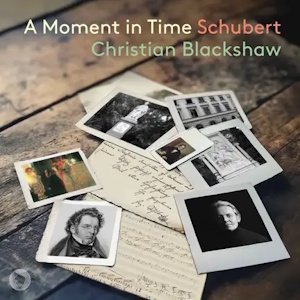
A Moment in Time
Franz Schubert (1797-1828)
Four impromptus, D.899
Piano Sonata No. 21 in B-flat, D.960
Christian Blackshaw (piano)
rec. 2024, Snape Maltings Concert Hall, Snape, UK
Pentatone PTC 5187 532 [79]
My colleague Colin Clarke reviewed the Wigmore Hall recital which saw this album’s launch. He loved what he heard and, when it came to the performance of Schubert’s final sonata, I was every bit as impressed.
Stephen Johnson once pointed out that the key to so much of Schubert’s music is the way it so delicately treads the borderline between peaceful contemplation and tragic melancholy, as though it doesn’t know whether it’s happy or sad. Blackshaw seems to understand that, and that’s why his take on the B-flat sonata is so successful. For one thing, his tempi feel beautifully judged, particularly in the first movement where the critical bass rumble is deployed sensitivity yet carefully. The second subject is playful but with a touch of melancholy so that this never feels like straightforwardly sad music, instead inhabiting that twilit zone between emotions that allows the listener to find so much depth in it. The end of the exposition is tentative and questioning, as though not entirely certain where to go next and, happily, Blackshaw takes the exposition repeat. (Some pianists, most notably Alfred Brendel, drop it because it unbalances the proportions, but in my view it’s essential, not least because if it’s cut then you lost a few critical bars of music.) Carrying on the emotional duality, however, there is a noticeable turn to the dark in the key change at the start of the development, but still with hope trying to push through in the playful upper arpeggios. Blackshaw achieves some half-hinted resolution in the recapitulation, and there is lovely, understated poignancy in coda. At more than 22 minutes in length this is a huge movement, but here it carries an unmistakeable sense of both a journey and a transformation.
Blackshaw uses lots of sustainer pedal in the second movement, giving it the quality of a halo of notes clustered together. The effect isn’t entirely to my taste, but it’s a valid enough approach, and it’s undeniably beautiful as it switches between keys and moods. Sadness is replaced by gentle determination in the central section while in the last section that final switch to major (the most heartbreaking key change in music?) feels almost desperately beautiful, the last few minutes becoming close to transcendental.
Blackshaw then finds a lovely skittish way with the scherzo, as though the time has finally come to relax, with a folk-dancey feel to the central trio section. There is more of a sense of free-wheeling energy to the final rondo too, energetic and slightly loose, and he even manages to reinstate the sense of a question mark over final pages, one that’s ultimately swept away… or is it?
The set of Impromptus is good, too, though with a little more qualification. The opening octave of No. 1 is disarmingly gentle, a knock on the door rather than an annunciatory fanfare. The first appearance of the theme sounds solid and a little straight, but it meanders into something beautiful and exploratory, though the second half after the key change is a bit too four-square. The opposite is true for No. 3, which feels perhaps a little too improvisatory, as though the bar lines don’t seem to mean very much. It’s also a bit too slow for my taste, coming across as a bit sleepy. No. 2, however, sounds freewheeling and unmoored, but with just enough control to stop it sounding undisciplined, and No. 4 has that important quality of ice running down a glockenspiel, the music sounding fluid yet simultaneously structured.
Of course, there’s an unfeasible quantity of competition out there for these recordings. The greats of the past – Kempf, Brendel, Richter – sit alongside the greats of today – Lewis, Andsnes, Uchida – and even Blackshaw’s greatest admirers won’t want to throw those ones out for this disc. This performance contains revelations of its own, however, and it says something that it’s worth hearing in that crowded field. The sonata in particular, is a reflection of Blackshaw’s art at its finest, and his admirers need not hesitate.
Simon Thompson
Buying this recording via the link below generates revenue for MWI, which helps the site remain free













