
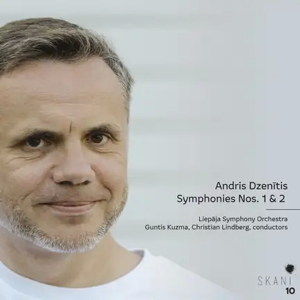
Andris Dzenītis (b.1978)
Symphony No. 1 Love is Stronger (2017)
The Lonely Pine Tree (2024)
Symphony No. 2 Warm Wind (2021)
Liepaja Symphony Orchestra/Guntis Kuzma (symphonies); Christian Lindberg (Pine Tree)
rec. 2002/18, Liepaja Concert Hall, Great Amber, Latvia
Skani LMIC177 [75]
Andris Dzenītis, a youngish Latvian, studied composition at the E. Dārziņš School. His tutors over the ensuing years included Pēteris Vasks, Pēteris Plakidis, Osvalds Balakauskas and Magnus Lindberg.
Dzenītis rejoices – if that is the word – in uncompromising implacability. The experience of hearing these two single-movement symphonies drives home the point.
In the First Symphony Dzenītis expresses and is absorbed by a sense of wide-open spaces. Along the way there are retreats into silence and new beginnings at 16:00 and 20:55, as if a demarcation of ends and beginnings. The work is however in a single track. His music is very spare and Shamanic. Insistent nagging figures groan and grumble then rise to a crest of belligerence which for me recalls the laconic work of Icelander Jón Leifs. Strange metallic shivers and shudders arise and melt into fog-laden leaden-footed progress. At 10:00 the music takes a leaf out of Robert Simpson’s towering Fifth Symphony; sheer coincidence. At 13:30 there is thunderous, barking anger as if a challenge is being thrown down. The ‘flags’ denote conflict not contentment. This composeris not a tunesmith, nor is he a natural creator of fast music, yet in their places there is an undeniable concentration and a sense of remorseless purpose. The last section bears the bundles of expiation and of fatigue before Dzenītis concludes with a dazed fade into lyrical wisps and discreetly glowing niente.
The Lonely Pine Tree has Dzenītis paying active tribute to an earlier Latvian composer, Emils Dārziņš (1875-1910). He rescues a viable composition from the fragmentary wreckage of a work by Dārziņš. The music carries Sibelian DNA in the form of drawled chatter, birdsong sounds, paradoxically aromatic atmosphere; it’s a meditative “slow burn”. Will we ever know how much of what we hear in this ambient music is Dārziņš and how much Dzenītis? In the face of this listening experience this question need not detain anyone other than musicologists.
The Dzenītis Second Symphony is, at 33 minutes, only four minutes longer than its predecessor. The opening pages have the sun rising in slow motion and solar flares seem to billow outwards. At 6:44 an urgency redolent of Tippett’s hectic string writing enters and five minutes later, at 13:00, sour, haunted music sounds out (curiously like the trumpet-calls in Jerry Goldsmith’s Patton film). An angry wash and whirlpool comes to restlessly dominate the sound-scape. At 25:59 there is a pause and wispy woodwind figures impinge. Their rise and fall has an elegiac feel and, as in the First Symphony, things settle into confiding solace and a slow fade.
The recording is tellingly atmospheric rather than Decca-detailed, while the liner notes are well judged so as to disclose all the background for which we so needily thirst in the case of a rarely encountered composer and his music.
Rob Barnett
Buying this recording via the link below generates revenue for MWI, which helps the site remain free













