
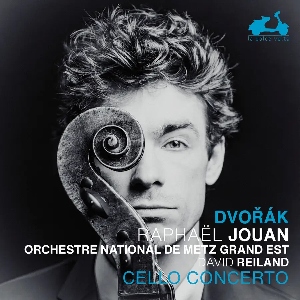
Antonín Dvořák (1841-1904)
Cello Concerto in B minor, Op. 104 (1894-5)
Rondo in G, Op. 94 (1891)
Waldesruhe, Op. 68, No. 5 (1883)
Raphaël Jouan (cello)
Orchestre National de Metz Grand Est/David Reiland
rec. 2025, Grande Salle de l’Arsenal Jean-Marie Rausch, France
La Dolce Volta LDV152 [53]
Raphaël Jouan brings the Dvořák concerto a nice freedom, with flexible phrasing and individual rubato. His tone is gratifyingly even over the cello’s long range, though I imagine some listeners will miss any sort of dusky, Rostropovich-like richness in the lower reaches. The development relaxes into a suspended stillness, and the return to the recap is unusually steady and grounded, without the customary precipitate race. The Adagio begins with a reposeful reed chorale, turning ominous at the minore passage; later, Jouan executes the double-stops impeccably. The Finale is effective as ever.
The orchestra is enthusiastic and reasonably disciplined, with vibrant, translucent midrange strings, though the principal horn is a bit tentative and recessed. The soft-grainedstringattacks generate a spurious tonal warmth, which can be pleasing, but the tuttis don’t blaze or expand – we get the volume, not the tonal amplitude – and they could have used more precision and point.
The two shorter pieces were once the concerto’s familiar LP “fillers.” Jouan’s statement of the Rondo‘s theme is unexpectedly introspective rather than unsettled, and he maintains that demeanour even answering the forthright tuttis, becoming lively only in the faster 6/8 episode. Cellist and conductor do collaborate on a flexible, tapered finish.
I basically enjoy any Silent Woods in which the syncopated opening bars don’t fall into individual notes – and there have been a few. Here, Jouan phrases soulfully “across the barlines”; as the expressive obbligato winds join him, they enrich the texture and pull it together. The episode where the violins take over the theme, forte, doesn’t work: their sound isn’t sufficiently rich or vibrant to balance the closer-miked soloist.
Oddly, Jouan’s playing is less impressive in the two shorter pieces: his bowing sounds less committed, his tone less firmly centered. Perhaps striving for quieter effects got him off the track, as it were. He’s a very fine player, and I’m glad to have heard him, but we can expect better in the future.
Stephen Francis Vasta
stevedisque.wordpress.com/blog
Buying this recording via the link below generates revenue for MWI, which helps the site remain free













