
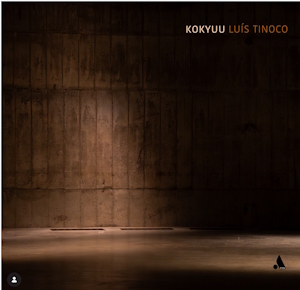
Luis Tinoco (b.1969)
Kokyuu (‘Breath’) Saxophone (alto) Concerto (2020)
Cancoes de Trabalho (Worksongs) for voice and orchestra (2022)
Cello Concerto No. 2 (solo and small chamber orchestra) (2024)
Accordion Concerto (2023)
Clarinet Concerto Entre Silencios (2019)
Ricardo Toscano (saxophone); Livia Nestrovski (voice); Filipe Quaresma (cello); João Baradas (accordion) (clarinet)
Orquestra Metropolitao de Lisboa/Pedro Neves
Orquestra Sinfonica do Porto Casa de Musica/Joana Carmero
rec. 2000s, Lisboa, Porto, Portugal
Artway Next0172025 [2 CDs: 90]
For many dedicated listeners Portugal has yielded up much music that is rewarding: Bomtempo, Freitas Branco and Joly Braga Santos.
Luis Tinoco practices his craft as a composer, academic and executant in Lisbon but has studied at London’s Royal Academy and at the University of York. The University also publish his music. This set of two CDs might open the door to hearing Tinoco’s music for the first time. It unfolds in front of you four of his concertos and a song-cycle.
His Saxophone Concerto, entitled Kokyuu (‘Breath’ in Japanese), is a sensuous piece which coils, uncoils and recoils in slow gyration. The orchestra supplies a breathy mosaic that is both warmed and warming. It’s not easy listening. The soundscape groans, slides, confides and never lashes out. The whole thing is unassailably modern yet the door of communication is held open to the listener who shows willingness to surrender to Timoco’s ideas.
Cancoes de Trabalho is a twenty-minute group of three songs for voice and orchestra. The completely beguiling experience of these songs is very much tied up in the sweetly-toned voice of Livia Nestrovski. Her voice sounds, approximately, like an amalgam of those of Netania Davrath, Cathy Berberian and Yma Sumac – no, really. They are termed “Worksongs” which suggests busy-ness. That said, the first of them is attuned to the demands of sleep, hypnotism and magical stuff. Contours are soft but with a scant spatter of raggedly raging edges. The second seems to plead over musical sighs and groans – like a modern Canteloube Auvergne song. Some episodes involve “sprechgesang” but it’s all tenderly done with no wreaths of Weill-like tobacco smoke. The last song (‘Lalo Roda’) again features magically breathy singing and a supernatural vocal range. Nestrovski sings solo for last couple of minutes. This is a moving work (and voice) with the capacity to bestride popular and classical. Nestrowski’s slinky witchery is utterly beguiling and emotionally moving.
The Cello Concerto No 2 comes next. Like all these concertos, the orchestra is used in a pointilliste way rather than as a massed cadre of sound. This work is in five movements and is paradoxically delicate, even when loud. Sinuous lines snake and pulse around the cello, which vies in style with the orchestra. It winds and unwinds its way and never scowls or fleers. Tinoco conducts a constant commerce between melody and discord, continuity and staccato, oratory and outburst. The final movement is unrelentingly percussive, evoking to my ears a chasse of witches and is more crashingly discontinuous than its predecessor movements. In all of this business Tinoco somehow ensures that the lyrical keeps to the crown of the carriageway.
The second disc opens with the two-movement Accordion Concerto. This is consistent with the other works in its style and in throwing down the gauntlet towards the listener. The Largo Meditatio sidles and slides, couples and decouples. It is not easy listening again but it is engaging. It you enjoyed the Saxophone Concerto you will want to try this next. There’s a parity of style and character. The last of the two movements is in Tinico’s broken mosaic style – with chattering and disconcertingly playful tendencies indulged. At 5:02 he unleashes the racily playful side of the accordion’s soul. All aberrant thoughts of “Para Handy” are banished to the outer Skerries. The instrument is put through its paces, and if towards the end of the second of its two movements, it fleetingly recalls Petrushka it is none the worse. As the music tracks its way to the final silence there are all sorts of steam-train chugging noises until if finds quietus. It is strange how, rather like the saxophone quartet format, the number of accordion concertos in this century and the last has ballooned. Tinoco shows us that the Norwegians and Russians are by no means the only homeland for this instrument.
The Clarinet Concerto Entre Silencios adheres to Tinico’s penchant for the 15-20 minute concerto. He will not test your patience. This single movement work majors, at first, on confidences and whispers: bleak but oddly assured. It steps into the light very very quietly – not shouted and slowly unfurling. Then comes a slow motion descent into wailing and moaning. This is a bit like Silvestrov’s gloriously psychedelic Fifth Symphony. Then the baritonal squeal of the clarinet simulates a siren: like a riff on the clarinet at the start of Rhapsody in Blue but quite unlike it in every other way. A sensuous dream follows with the solo fluttering on the beat of butterfly wings. This largely static music slips and slides from note to note.
The liner booklet is splendid as to the detailed backdrop to the composer, the music and valorous artists. As for the acoustic, it feels utterly attentive to the scores. The sound constantly engages the listeners’ ears with the detail of the music’s challenges and how those challenges are met. This is unfamiliar music but the musicians and artists display a pleasurable conviction.
Tinoco is far from unknown to the record industry. His Blue Water and Archipelago collections are on Odradek. More accessibly, Naxos boast a Tinoco collection on 8.572981.
Rob Barnett
Availability: Artway












