
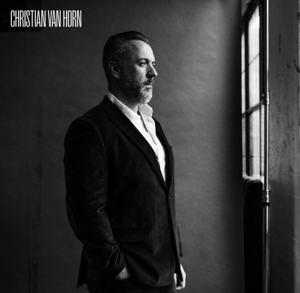
Christian Van Horn (bass-baritone)
Kaunas City Symphony Orchestra / Constantine Orbelian
rec. 2026, Kaunas, Lithuania
Reviewed as download
Private release [50]
Christian Van Horn has been pursuing his career as an opera singer for about 22 years, and has been performing big roles (Mefistofele, Phillippe II, Escamillo) in major opera houses (The Metropolitan, San Francisco, Paris, Covent Garden) since 2018. His current and upcoming engagements include Don Giovanni in Chicago and Vienna. Considering his career in the opera-house, his recordings have so far been modest, the most prominent of them being Figaro in Currentzis’s Nozze more than ten years ago, and the four bass-baritone parts in Minkowski’s 2024DVD of Les Contes d’Hoffmann. It is therefore no surprise that, as the press release states, “After waiting his whole career, Christian Van Horn stopped waiting for a label and produced this self-titled opera-aria album himself.”
This compilation brings together some of the most famous bass or bass-baritone roles, nearly all of which he has sung on stage. They are all from 19th-century works except for the Billy Budd aria. The Kaunas orchestra accompanies him well, though it is rarely exciting.
The aria by Britten is, for me, not the most auspicious start to the recital. This may be because I am personally not a particular fan of Britten’s idiom, and also because the modernness of the music requires, for me to feel comfortable, a precision of pitch which is occasionally lacking here (for example at the words “if love”). But I recognise that Van Horn creates a believable character for the tormented Claggart.
Five out of the eleven tracks here are devoted to Verdi, from the straightforward, authoritative characters like Zaccaria in Nabucco or Silva in Ernani to the more psychologically developed roles like Fiesco in Simon Boccanegra and of course King Phillip II in Don Carlo. Attila’s nightmare is recounted with suitable fear in the voice, and a grainy timbre reminiscent of Samuel Ramey. Here and in the Nabucco and Ernani arias, Van Horn displays an attractive richness and good legato. In the aria from Boccanegra he conveys Fiesco’s nobility and suffering very well. The phrasing is attractive and the voice is even from bottom to top, though I have the impression that he is more at ease at the top of the range than at the bottom, which one would expect when a bass-baritone tackles these bass roles. King Phillip’s aria is of course a monument of operatic bass singing, and he does it touchingly, making attractive use of his vibrato and showing impressive breath-control. There are moments when the voice spreads slightly under pressure, as on ‘a me’ at the end, but this is no doubt for expressive reasons; it is a very committed performance.
The two French arias – the declamatory extract from Robert le Diable and the more lyrical “Scintille, diamant” from Les Contes d’Hoffmann – are delivered with authority. In the Offenbach, one might have wished for a more mellifluous timbre; to my ear the voice is slightly coarse-toned even when singing quietly, except in the higher register, when it becomes cleaner.
The role that is most represented here is that of Mefistofele in Boito’s opera of the same name, which was Van Horn’s first big role at the Metropolitan, with all three arias (though, strangely, not presented in the correct order). He is very mobile in “Ave Signor,” the voice moving up to the higher part of the register easily, and suitably menacing in “Son lo spirito che nega,” though I would occasionally have liked a cleaner, more focussed tone. There is real attack in “Ecco il mondo”, again in the Ramey vein.
One can quite understand Christian Van Horn wanting to produce a solo album. The selection on this CD shows that he certainly has what it takes, vocally and in terms of expression, to portray effectively a range of characters. One could sometimes wish for more refinement and tidiness, and the qualities that some of the other singers on record have brought to these roles, be it Van Dam’s suavity in Offenbach, or Ghiaurov’s line and power in Verdi, but Van Horn is as good or better than many a contemporary bass-baritone: he can colour his voice in the service of his gripping characterisation, and the voice has good attack and a certain attractive solidity. He clearly deserves to have his own solo album.
David James
Availability: (private release)
Contents
Benjamin Britten (1913-1976)
Billy Budd O beauty O handsomeness goodness
Giuseppe Verdi (1813-1901)
Attila Mentre gonfiarsi l’anima
Nabucco Oh chi piage
Ernani Infelice e tuo credevi
Arrigo Boito (1842-1918)
Mefistofele Son lo spirito che nega
Jacques Offenbach (1819-1880)
Les Contes d’Hoffmann Scintille diamant
Giuseppe Verdi
Don Carlo Ella giammai m’amo
Arrigo Boito
Mefistofele Ecco il mondo
Mefistofele, Ave Signor
Giacomo Meyerbeer (1791-1864)
Robert le Diable Nonnes qui reposez
Giuseppe Verdi
Simon Boccanegra Il lacerato spirito













